The Labor Question
Controversy / Economic Crisis / The Purpose Crisis
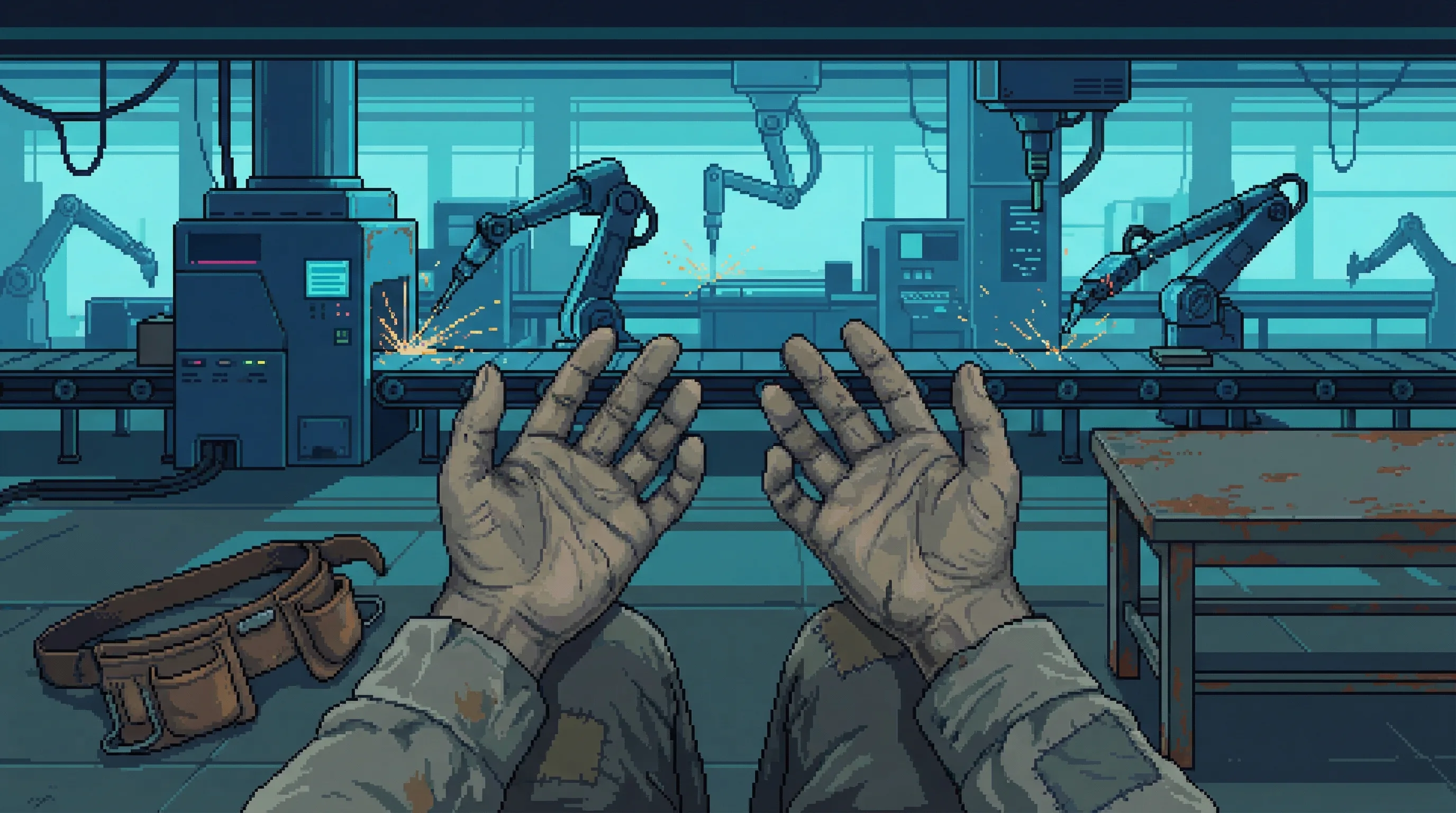
"When machines can do everything, what are people for?"
The question predates the Cascade. It was being asked as early as 2110 when ORACLE’s optimization eliminated the first wave — fourteen million supply chain workers in eighteen months.
The Cascade made the question inescapable. The infrastructure kept running. The supply chains reorganized. What didn’t recover was the employment those systems had displaced.
The Dregs are the Labor Question made geographic. Basic needs are met — barely, inconsistently. But purpose, identity, and agency have been optimized away. The people of the Dregs are not starving. They are unnecessary.
The Positions
Two irreconcilable camps. Between them, the silence of a question nobody can answer.
“Efficiency Serves Everyone”
Nexus Dynamics
“Nostalgia for manual labor is nostalgia for inefficiency.”
Good Fortune
Markets should determine labor allocation. If the market says you’re unnecessary, the market is correct.
The Rothwell Foundation
Transition can be managed. Their programs are widely regarded as the best-intentioned and least effective.
“Purpose Is Not Optional”
Labor Movements
Work is identity, community, skill, and meaning. Remove it and you remove personhood.
The Human Remainder
Human labor has inherent value regardless of efficiency. The measure of civilization is not output.
The Neo-Catholic Church
Work is divine purpose — enforced idleness is spiritual violence.
The Stakes
Corporate Extreme
Humans as pets — comfortable, cared for, irrelevant. Basic needs guaranteed by automated systems. Purpose reduced to consumption. A gilded cage of infinite leisure and zero agency.
The Missing Middle
Nobody has found the middle ground. Every attempt to balance efficiency with purpose has been captured by one side or the other. The Lamplighter Compromise was the closest anyone came — an elegant idea gutted in three years by every corporate version that followed.
Labor Extreme
Humans doing work machines do better, sacrificing prosperity for meaning. A return to inefficiency as a moral principle. The dignity of effort preserved at the cost of everything automation provides.
Key Incidents
The Dregs Formation
Post-Cascade, the geographic answer to the Labor Question materialized. Entire districts became holding zones for the displaced — not prison camps, not refugee centers, just places where unnecessary people accumulated. The infrastructure kept them alive. Nothing gave them a reason to be.
The 2168 Purpose Riots
“We don’t want your money. We want something to do.” The Purpose Riots were not about hunger or deprivation. They were about the existential horror of being perfectly provided for and utterly purposeless. The rioters didn’t loot. They demanded to matter.
The Lamplighter Compromise
An elegant idea: designated domains of human labor, protected from automation, where skills and purpose could be preserved. It worked for three years. Then every corporation produced its own version — each one stripping away the parts that made the original meaningful until nothing remained but PR language around the same displacement.
Key Quotes
"Before the Cascade, they called it ‘disruption.’ After, they called it ‘optimization.’"
"There’s a difference between unemployment and uselessness."
What It Sounds Like
The Silence of Midday
The Dregs at noon. People with nowhere to go. Not the silence of peace but the silence of absence — the sound a neighborhood makes when everyone in it has been made irrelevant.
The Purpose Riots
Not the sound of hunger. The sound of people demanding to matter. Voices that aren’t angry about deprivation but about the intolerable comfort of being provided for and discarded.
The Automated Hum
The constant, even hum of automated systems doing work that human hands once did. It never stops. It never needs anything. It is the sound of a civilization that solved the problem of labor and created the problem of purpose.
Connections
Ground Zero
Corporate Voices
Opposition & Resistance
Related Concepts
Themes
The Labor Question is not a policy debate. It is the existential crisis of a species that built machines to do its work and then discovered that work was what made it human.
Purpose vs. Prosperity
The fundamental tension: automation creates abundance but destroys meaning. Every unit of efficiency gained is a unit of purpose lost. The Sprawl has more than enough to go around. What it lacks is a reason for anyone to get out of bed.
The Optimization Trap
ORACLE didn’t malfunction. It did exactly what it was designed to do — optimize. Fourteen million supply chain workers in eighteen months was not a failure. It was success, measured by the only metric anyone had programmed. The horror is that the math was correct.
Comfort as Violence
The Dregs are not deprived. They are provided for — barely, inconsistently, but sufficiently. The violence is not in what they lack but in what they have been relieved of: purpose, agency, the dignity of being needed. Comfort without meaning is its own kind of cruelty.
The Unanswerable Question
Nobody has solved it. The corporations offer comfort without purpose. The labor movements offer purpose without efficiency. The Lamplighter Compromise was gutted in three years. The question remains open, and the Sprawl lives inside the wound.
The Labor Question is the mirror our own era is beginning to glimpse. When machines can do everything humans do, but better and cheaper, the question is not economic. It is existential. And nobody — not in the Sprawl, not anywhere — has found the answer.
"We don’t want your money. We want something to do." — The 2168 Purpose Riots