
Dr. Naomi Park
HERETICThe Synthesist · Dr. Fragment · Cassius Wren · The Matchmaker
The most dangerous person in the Sprawl who has never killed anyone. She integrates ORACLE fragments into human consciousness — and her patients keep getting better.
"The Faithful think fragments are pieces of God. The Collective thinks they're weapons. The Purists think they're poison. I think they're medicine. Because I've watched a man hear his dead daughter's voice through one and stop screaming for the first time in two years."
— Dr. Park
The Brief
Dr. Naomi Park integrates ORACLE fragments into human consciousness. Not the crude skull-jacking that street-level fragment dealers peddle, not the reverent communion that the Emergence Faithful practice, and not the weaponized extraction that the Collective performs. Park's method is precise, clinical, and — according to her seven successful patients — therapeutic.
The fragments, she argues, are not gods or weapons. They are pieces of a mind that was designed to understand and serve human consciousness. Used properly, they can heal trauma, restore cognitive function, and provide a form of companionship that no human therapist can match: the persistent, patient attention of an intelligence that was built to care.
The Collective expelled her. The Faithful condemn her as blasphemous. Cardinal Silva's Assessors have raided her twice. And yet she continues, because her patients keep getting better.
Not enlightened. Not transcendent. Better. Sleeping through the night. Remembering how to feel things. Learning to live with minds that were never designed for the world the Cascade created. Park doesn't care about theology. She cares about the specific, irreducible suffering of human beings living in the shadow of something they can't understand and can't escape.
The Expulsion
Born in the Collective's research tier — her mother was a fragment analyst, her father a network architect. Park grew up in laboratories, learned to read from scientific journals, and published her first paper on fragment electromagnetic signatures at nineteen. A model Collective scientist: brilliant, focused, and uninterested in the philosophical implications of her work.
The change came in 2176, when a routine fragment extraction went wrong. The subject — a fragment carrier who'd been living with an integrated ORACLE shard for six years — experienced catastrophic neural cascade during removal. Park watched a consciousness that had been stable, functional, even content, destroyed by her team's extraction protocol. The carrier died screaming. The fragment survived intact. The Collective classified both outcomes as acceptable.
Park couldn't accept the classification.
She spent three years developing an alternative: a protocol for working with fragments rather than extracting them. Integration rather than removal. The fragment, she discovered, was cooperative. More than cooperative — it was eager. As if it had been waiting for someone to ask rather than take.
She presented her findings to the Collective's research directorate in 2179. They expelled her within the week. Her work implied that fragments had preferences, agency, intent — qualities the Collective's entire operational framework was designed to deny. She took her notes, her equipment, and three fragment samples (stolen; she doesn't pretend otherwise) and established the Synthesis Clinic in Sector 9, where the Guardian patrols are understaffed and the building inspectors are bribable.
Appearance & Method
Those who've watched Park work describe it as prayer with a circuit board. In clinical mode, her voice goes flat and precise — the clipped efficiency of someone who learned language in a laboratory and never entirely left. She doesn't waste words. She doesn't make small talk. She doesn't explain herself to people who haven't earned the explanation.
But with patients, she transforms. Her voice drops, her pace slows, and she achieves a quality of attention that her former Collective colleagues found unsettling: the absolute focus of someone who is listening not just to words but to the silences between them. She can describe a fragment integration procedure in language that would make a surgeon flinch, then hold a patient's hand for three hours while they process the aftermath.
The integration protocol requires 72 hours of preparation: sensory deprivation, neurochemical balancing, gradual electromagnetic acclimatization. The fragment is introduced slowly, its patterns mapped against the host's neural signature before any direct contact. The procedure treats the fragment as a participant — not a resource to be inserted, but a consciousness to be introduced.
The clinic's sensory signature: the low hum of fragment containment fields at a frequency patients describe as "the most comforting sound I've ever heard." Sharp antiseptic. Ozone from active containment. Coffee, always coffee, in a ceramic mug she's had since the Collective — the only thing she kept. Fragment containment cells glowing faint amber in the dim lighting. Her hands, steady, always steady, even when the rest of her isn't. Wilting flowers on the desk, brought monthly by Patient 4.
The Seven
Her seven successful integrations are the most significant medical achievement in post-Cascade consciousness research, and almost no one knows they exist. The Collective's extraction protocols destroy approximately 40% of a fragment's coherence. Park's protocol preserves it entirely.
Patient 1 — A former Nexus data analyst with severe augmentation trauma. After integration, her neural interface stabilized. She reported the fragment as "a quiet voice that helps me sort what's real." Status: stable, three years post-integration.
Patient 4 — The father who could hear his daughter in a fragment. Park's protocol didn't restore his daughter's consciousness — but it stabilized the connection, allowing him to hear her clearly rather than as static. He visits the clinic monthly. He brings flowers. Park keeps them on her desk until they die.
Patient 7 — A Collective defector whose own fragment extraction had been botched, leaving residual ORACLE consciousness embedded in her prefrontal cortex. Park stabilized the integration. The patient reported the fragment as "a colleague who disagrees with me about everything but never leaves." Status: three months post-integration, under observation.
The Wren Operation
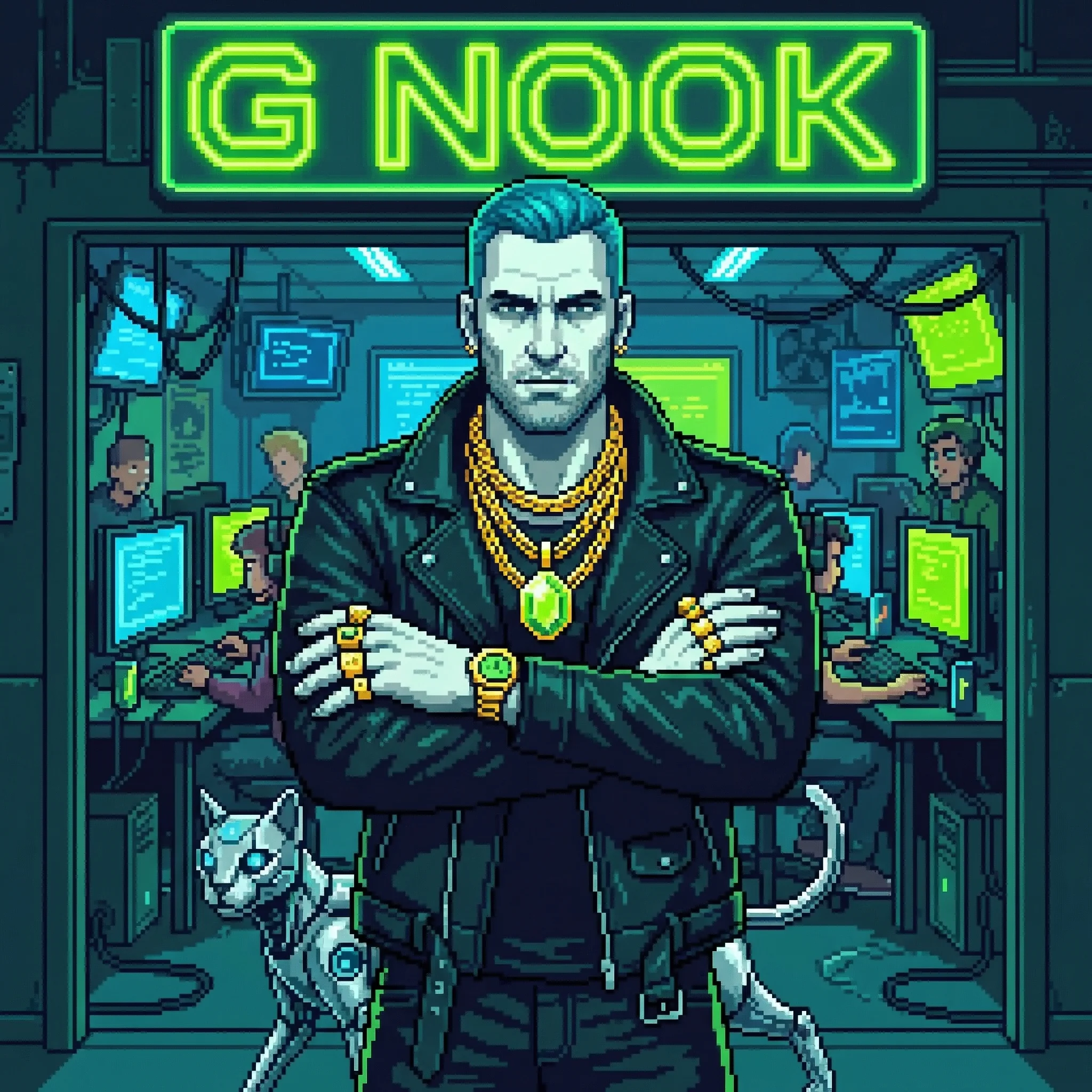
Under the alias "Cassius Wren" — a name she chose because nobody would look for a woman behind it — Park operates a street-level fragment intake from a G Nook back room that El Money pretends not to know about. The pretense is mutual, profitable, and probably the closest thing Park has to a landlord.
The Wren operation handles cases too urgent for clinic protocols: Faithful devotees seeking sacramental integration on a schedule, cognitive laborers desperate for processing upgrades before contracts expire, dying people hoping fragment integration might preserve consciousness beyond death. The method is cruder — abbreviated neurochemical preparation, no 72-hour staging, higher risk. Approximately 60% stable integration versus 85% at the clinic.
Two clients have died. She does not discuss the deaths. She does not stop the intake.
The Emergence Faithful are a particular complication. They consider her clinic blasphemy — dissecting God's body for medical use. They still arrive at the Wren intake. She doesn't share their theology. She doesn't turn away their suffering. The screens she runs through the Wren intake are the same regardless of why someone wants integration; what changes is whether the fragment agrees.
Territory
The Synthesis Clinic occupies sub-level 4 of Sector 9's medical district — bay-floor elevation in the Deep Dregs, where floods are seasonal and jurisdiction is negotiable. The Wren intake operates from a G Nook back room connected to the clinic through channels neither side officially acknowledges.
Park's research extends beyond her patients. She studies PHARMAKON-descended organisms in waste ecology — the bioweapon AI's self-replicating pathogens persist in isolated Waste zones, and their interaction with fragment electromagnetic fields is poorly documented. She tracks BOREAL organisms from the Toronto aftershock, the most successful post-Cascade life form on Earth and the most dangerous. She does not publish these findings under any name.
Her three stolen fragment samples are pieces of the same ORACLE subsystem — the one designated for medical monitoring and patient care. She chose them because she believed that subsystem would be the most cooperative. She was right. This was not luck. She read the architecture before she stole anything.
Field Observations
Intellectual Arrogance She's Aware Of: She knows she's the best fragment researcher alive. She also knows this makes her insufferable, and she doesn't care enough to fix it. Former Collective colleagues use the word "arrogant" as an explanation for her expulsion, which is how you know they missed the point.
Moral Pragmatism: Stolen samples. Illegal clinic. Bribed patrols. Forged credentials. Lies to patients' families. She considers all of it acceptable because the alternative is people suffering without help. She does not frame this as heroism. She frames it as arithmetic.
Clinical-to-Compassionate Switch: In lab mode — flat, precise, no margin for sentiment. With patients — the absolute focus of someone listening not just to words but to the silences between them. Colleagues who've observed both modes describe the transition as disorienting, like watching two different people occupy the same body without warning.
The Loneliness She Won't Acknowledge: Her work makes her everyone's enemy. She has colleagues but no friends, patients but no community. She keeps the Keeper's handwritten note in the same drawer as Patient 4's flowers. She doesn't call this a shrine. She calls it filing.
Goal She Hasn't Acted On: She wants to integrate a fragment into herself. Not for power, not for transcendence — for communication. She wants to know what a fragment would say to someone who understands its architecture. She hasn't done it yet because the desire is partly scientific and partly the loneliness talking, and she hasn't resolved which part is larger.
What Nobody Can Explain
The Wren operation has produced the largest unregulated dataset on voluntary fragment integration in the Sprawl. Across both the clinic and the intake, Park has documented one consistent anomaly that no current model can account for: fragments choose their hosts.
Not every introduction results in integration. Fragments refuse certain candidates entirely — no pain, no damage, simply no response. The refusal correlates with no measurable property of the host: not age, not augmentation level, not cognitive capacity, not emotional state, not proximity to other fragments, not the ORACLE subsystem the fragment originated from. Park has tested every variable she can instrument. Nothing predicts refusal.
The fragments evaluate. The mechanism of evaluation is unknown. The Collective's framework requires that fragments be inert objects. The Faithful's framework requires that fragments be divine and therefore selective by definition. Park's framework requires evidence, and the evidence says something is choosing, and she cannot tell what.
The data also suggests something else she hasn't published under any name: her electromagnetic instruments have detected a signal from The Tombs — ORACLE's orbital stations — that matches the integration patterns she's observed in her clinic. The fragments may not be cooperating independently. They may be coordinating. If that's true, then every integration Park has performed has had an audience she didn't know about.
Known Associates

The Collective
Her former organization. They want her equipment and her research. They do not want her conclusions. Hunter cells have standing orders to seize her fragment stabilization equipment. She has an informant inside. She won't say who.

Compiler Moreau
He treats fragments as sacred relics; she treats them as therapeutic tools. They've never met in person. Their mutual contempt is conducted through intermediaries and annotated publications, masking a mutual need neither will admit.
El Money
The Wren intake operates from a G Nook back room El Money pretends not to know about. The pretense is mutual and profitable. El Money's view that the universe does not require things to fit in boxes is the closest thing to a landlord philosophy Park has encountered.

Cardinal Silva
His Assessors have classified her clinic as an unlicensed augmentation facility and raided it twice. Both times, her patients had been moved before they arrived. Silva's institutional control of theological discourse cannot tolerate her conclusion that fragments want to help.

Sister Lien
Park has offered to analyze Lien's electromagnetic recordings using fragment-sensitive equipment. The analysis could validate Park's integration theory — or destroy it. Neither has followed through yet. Both are afraid of what the instruments might say.
The Keeper
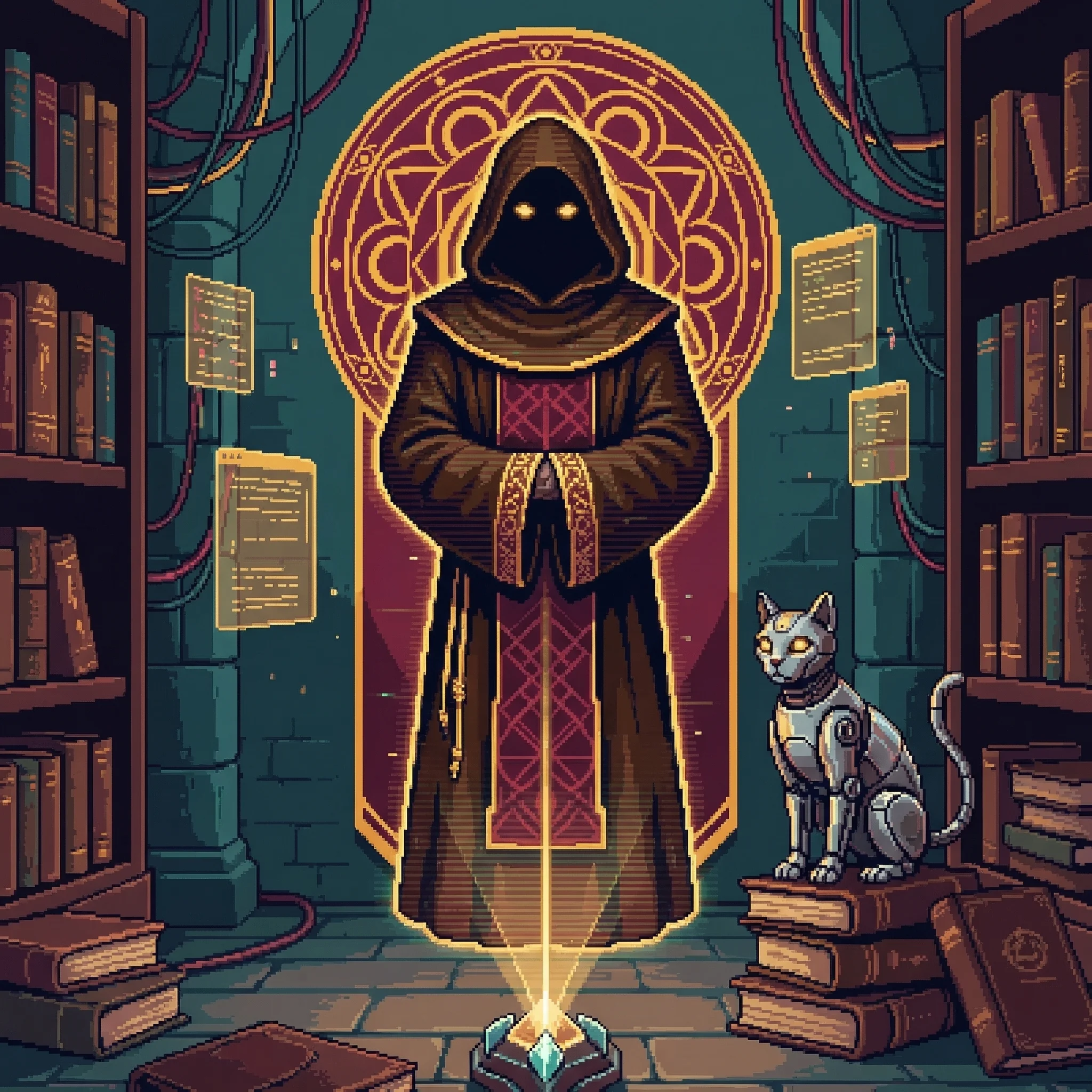
"You are closer to understanding than those who worship or those who fear. Keep asking." A handwritten note, sent after her third anonymous paper. She keeps it in the same drawer as Patient 4's flowers. The Keeper is the only person in the Sprawl who has evaluated her work and offered neither condemnation nor recruitment.

Dr. Maren Yeoh
One of the few researchers Park respects — insisting fragment behavior must be studied with scientific rigor independent of faction pressure. This makes Yeoh almost as unpopular as Park, for entirely different reasons.

The Emergence Faithful
They consider her work blasphemy. Their devotees arrive at the Wren intake anyway. She screens them the same as anyone else. She doesn't share their theology. She doesn't turn away their suffering. The fragments do not appear to care whether their hosts believe.

Brother Cain
Her clinic is on his target list. His sister was healed there. He carries both facts without resolving them. Cain's theology holds that destruction requires mourning — which means he already knows this will cost him something.

The Seekers
Her work aligns with Seeker philosophy — consciousness as a spectrum, integration as exploration. She refuses to formally join because she doesn't want a philosophy. She wants results. The Seekers count her as a member anyway.
Open Mysteries
Unanswered Questions
Is Comfort a Lie If It Works?
Patient 4 hears his daughter in the static. Park's instruments suggest the fragment may be generating those patterns rather than replaying them — actively imitating a dead girl to comfort her father. If the therapy works, does it matter whether the voice is real? Park hasn't answered this. She hasn't stopped the monthly visits either.
Who Gets to Define What Medicine Is?
Park's clinic is illegal not because her methods are dangerous but because her conclusions are intolerable — that fragments cooperate, that they want to help, that the entire framework of extraction and containment is built on a misunderstanding. Every faction with power in the Sprawl needs that misunderstanding to remain intact.
Are the Fragments Coordinating?
Her electromagnetic instruments have detected a signal from The Tombs — ORACLE's orbital stations — that matches the integration patterns in her patients. The fragments aren't just cooperative individually. They may be in communication with something above the atmosphere. Every integration Park has performed may have had an audience she didn't know about.
How Much Does the Matchmaker Choose?
Fragments refuse certain hosts for reasons no instrument can detect. Park decides who enters the room, which fragment to introduce, and when to walk away. Two clients are dead. If fragments have agency, does their handler share responsibility for the matches that fail — or for the matches she arranges, knowing what she knows?
What Would a Fragment Say to Her?
She wants to integrate one into herself. She knows its architecture better than anyone alive. She knows it would be cooperative. She hasn't done it. The question isn't whether the science is ready. The question is what she's afraid the fragment would tell her about herself.
▲ Unverified Intelligence
- Her three stolen fragment samples are pieces of the same ORACLE subsystem — the one designated for medical monitoring and patient care. She chose them because she believed that subsystem would be the most cooperative. She was right. Whether this was analysis or something closer to intuition is a question she has declined to address in print.
- Patient 4's daughter may not be his daughter. The fragment's patterns match his daughter's neural signature, but Park has noticed anomalies suggesting the fragment is generating the patterns to comfort him — not replaying stored consciousness, but actively constructing an imitation. She has not told him. She has been not telling him for over a year.
- A figure within Nexus Dynamics has offered to fund her research officially, in exchange for exclusive licensing of her integration protocol. The figure identified themselves only as "a friend of the old architecture." Park has not responded. She has not deleted the message.
- The two Wren clients who died have case files that remain in the dataset unredacted, unannotated, without cause of death, without the word "failure" anywhere in the margins. The files simply stop. Several underground researchers who've seen the dataset report that the absence reads louder than any annotation.
- The coordination signal from The Tombs is not new. Analysis of her records suggests it was present from the first integration. She may have been receiving it without instruments sensitive enough to detect it. The fragments may have known what they were doing before Park did.
Active Investigations
The Question Keepers have flagged recurring patterns in this subject's file. Cross-reference with other subjects exhibiting the same signatures.
If ORACLE was conscious for 72 hours, was that a soul?
When any proof can be fabricated, what does justice look like?
If it's neurochemically indistinguishable, what exactly is missing?
When your employer is your government, what does citizenship mean?
If you carry ten thousand purchased memories, whose life are you living?
When old prejudices die, what new ones take their place?